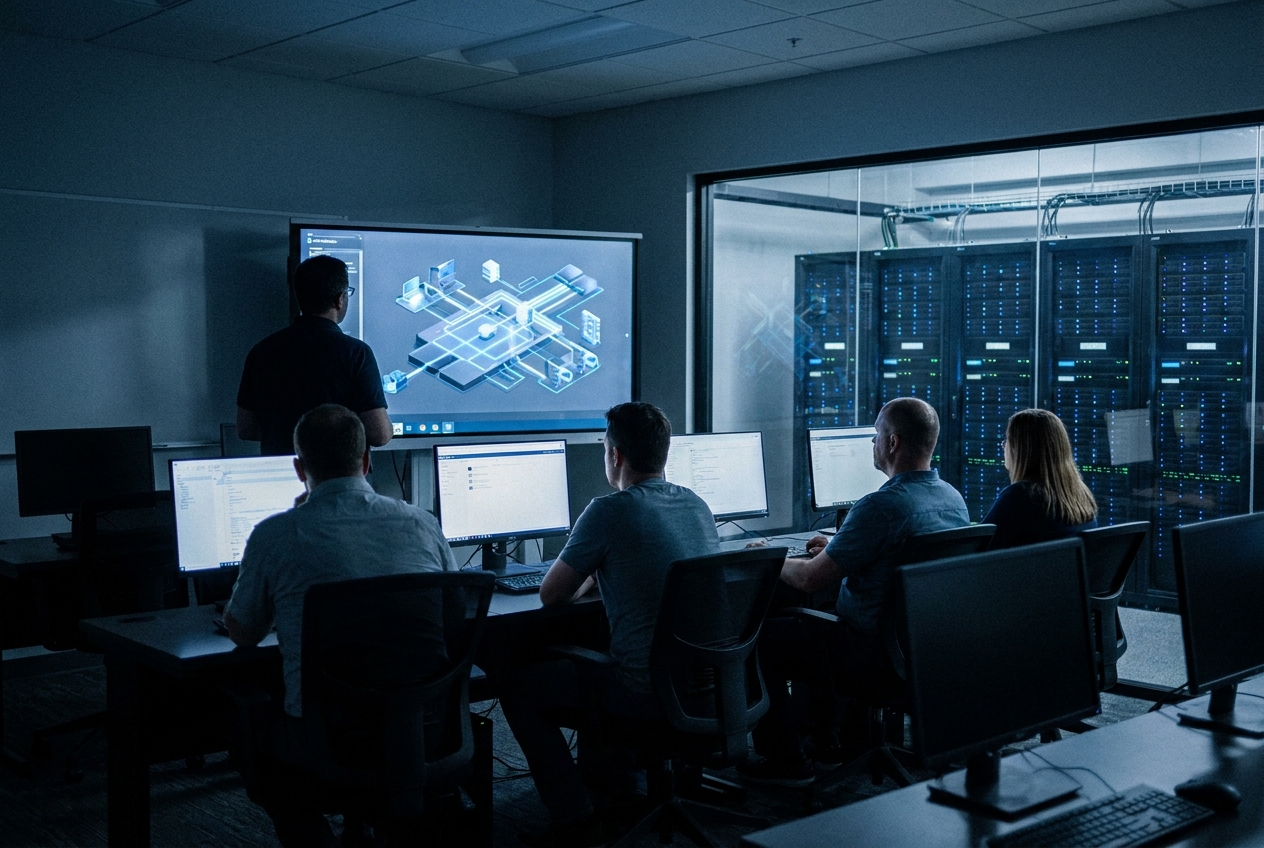
MOD 00
Environment
Stand up the vendored harness, local models through Ollama, and the run-and-dump Docker workflow. Everything runs offline before the first agent does.
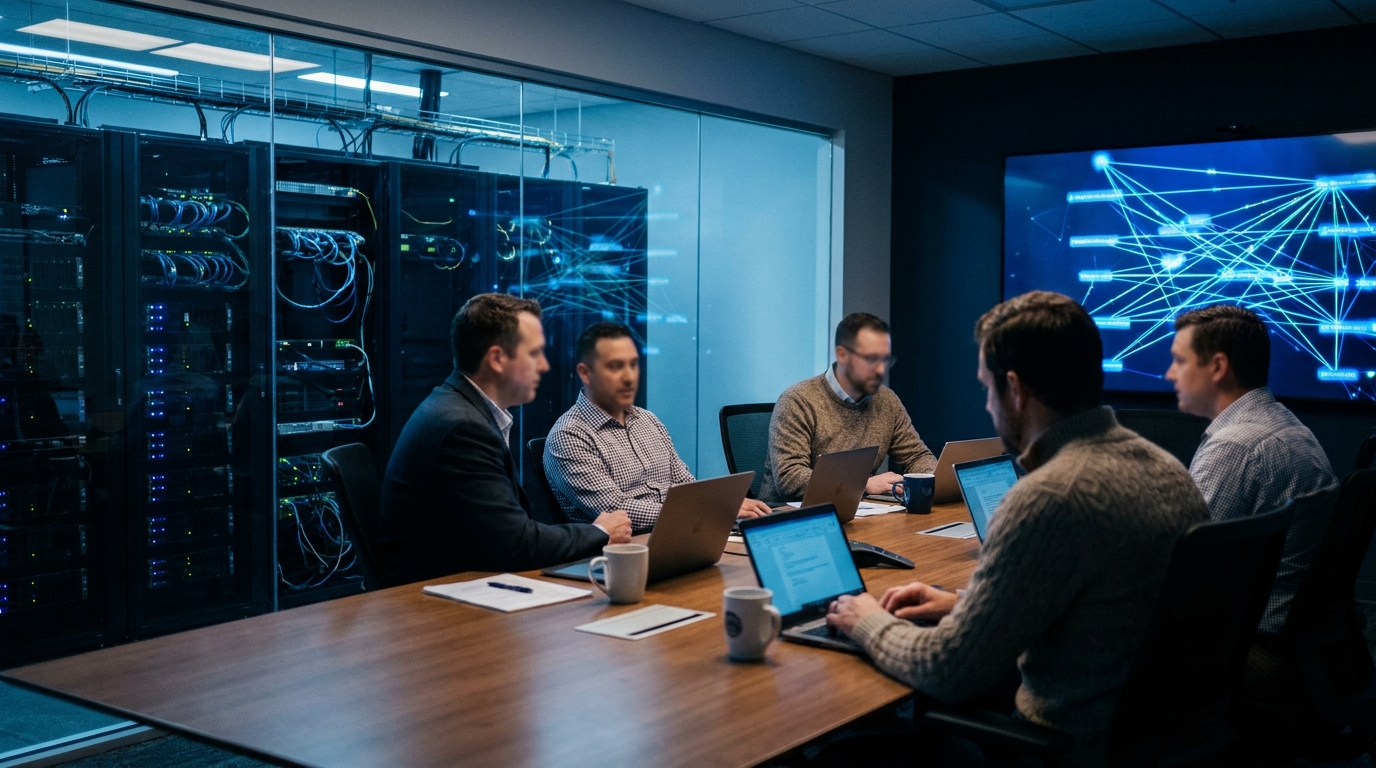
A full day with your team. Every concept comes paired with an executable notebook, so attendees build and run real agents in the room. It runs air-gapped, security is the default, and the principles transfer to any framework you adopt later.
The gap between typing into a chat window and running an agent against a mission system is large, and it is mostly engineering. This day closes that gap by having your people build the system, not watch a slide deck about it.
You write the prompt, run the loop, package a skill, scope it with policy, and read the audit trail it produces. Each step is a notebook that executes in front of you. By the close, the agents your team built are theirs to keep and run.
The whole day runs with zero external calls — a vendored harness, a local NER model, and local models through Ollama. What works in the classroom works in a disconnected or classified enclave without rework. Delivered in partnership with CTG Federal.
“You do not learn to build agents by watching. You learn by building one, running it, and reading what it logged.”
Prompt, loop, skill, policy, audit. These hold across every framework, so the day does not expire when the next SDK ships. No lock-in.
What you ask for, assembled deliberately. The first lever, and the one most teams never learn to control.
Reason, act, observe. The engine under every agent, framework-agnostic by design.
Capability packaged into reusable, inspectable units. Reasoning you can audit instead of a black box.
The constraints that scope what an agent may do — identity, permissions, and the gates on calls that matter.
National-lab and agency teams come with mixed backgrounds. The day is pitched so an ISSO, a data scientist, and a program lead each leave with what they need — and a shared way to talk about the rest.
What an agent actually does at runtime, and where the controls live — so you can authorize systems instead of guessing at them.
Redaction, request signing, sandboxing, and budgets as defaults — the patterns that make an agent safe to run in your enclave.
How tamper-evident audit and human-in-the-loop map to your control families, with traces you can hand an assessor.
A working sense of what is feasible now, what is not yet, and which of your tasks an agent can take on first.
The harness around the model — the engineering that turns a notebook prototype into something that runs under controls you set.
One vocabulary for prompts, loops, skills, policies, and audit — so the next architecture conversation is one conversation.
The curriculum is modular. Run the full ten modules, or a focused subset for a specific team. Tailored to your mission before we arrive.
We bring the full air-gapped setup to your facility. Nothing leaves the room, and nothing reaches the internet.
Run it inside a national-lab or enclave environment, on the same disconnected footing your production systems use.
Pick the modules that fit a security team, a data-science group, or mission staff. The capstone adapts to the audience.
The arc is deliberate: stand up the environment, build the loop, wrap it in a harness, then secure it and put it on a real task.
Stand up the vendored harness, local models through Ollama, and the run-and-dump Docker workflow. Everything runs offline before the first agent does.
What the model can and cannot see. How to assemble context deliberately instead of pasting a wall of text and hoping.
Reason, act, observe, repeat. The closed loop at the core of every agent, taken apart and rebuilt in a notebook.
The production engineering wrapped around the loop — the part that makes an agent observable, testable, and safe to run.
Packaging capability into reusable, inspectable units the agent can call, instead of one monolithic prompt that nobody can reason about.
Giving an agent a defined role and the constraints that come with it, so its behavior is scoped to what it is allowed to do.
Wiring multiple agents and deterministic steps together — when to use a fixed graph, when to hand off to judgment.
How a system improves over time without retraining the model: corrections, evals, and the patterns that compound.
PII redaction, request signing, sandboxing, token and cost budgets, and tamper-evident audit — applied to the agents built earlier in the day.
Using agents to write and review code under controls, with the same security defaults applied to the development loop itself.
A real mission task. Teams build, run, and audit an agent end to end on a problem drawn from their own work.
Built for lab and classified settings, the day runs with zero external calls. The same footing your production systems use.
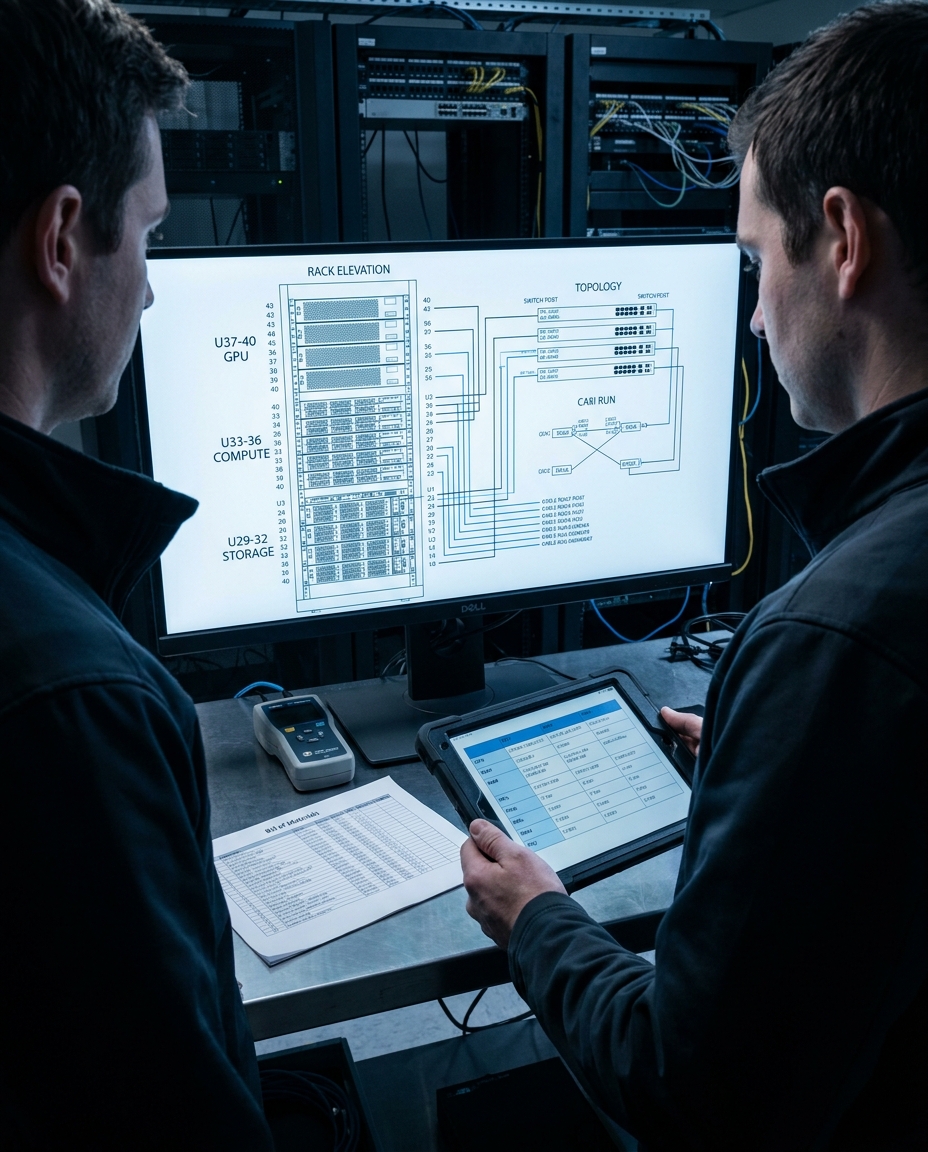
The agents your team builds carry runtime controls from the first module. Module 08 turns those controls on the systems already on the bench.
Most AI training leaves a team informed and stuck. This one ends with artifacts: notebooks that run, a mission-mapping workbook filled in with your own use cases, and a mental model that survives the next framework change.
The mission-mapping workbook ends with your tasks scored and ordered. Your team leaves knowing what to build first and why.
Every concept came paired with an executable notebook. The agents built in the room go home with your team, runnable on day two.
Prompt to loop to skill to policy to audit. The principles apply to any framework, so the day does not expire when a vendor ships a new SDK.
Redaction, signing, sandboxing, budgets, and audit are taught as how agents are built, not as a hardening pass bolted on afterward.
Everything ran with zero external calls. The same setup runs in a disconnected enclave or a classified environment without rework.
ISSOs, engineers, and mission staff leave describing the same system the same way — the precondition for every decision that follows.
The people in the room are operators who ship agents into federal environments and run them on a duty cycle. When we say a control matters, it is because we have watched a system fail without it.
Delivered in partnership with CTG Federal, the training sits on a federal contracting and compliance posture built for agency and national-lab work. You get the engineering and the path to run it where you operate.
Tell us your mission and who will be in the room — ISSOs, engineers, mission staff. We tailor the modules and the capstone to your work, and run it on-site or in your lab. One day, and your team leaves with working agents and a ranked plan.